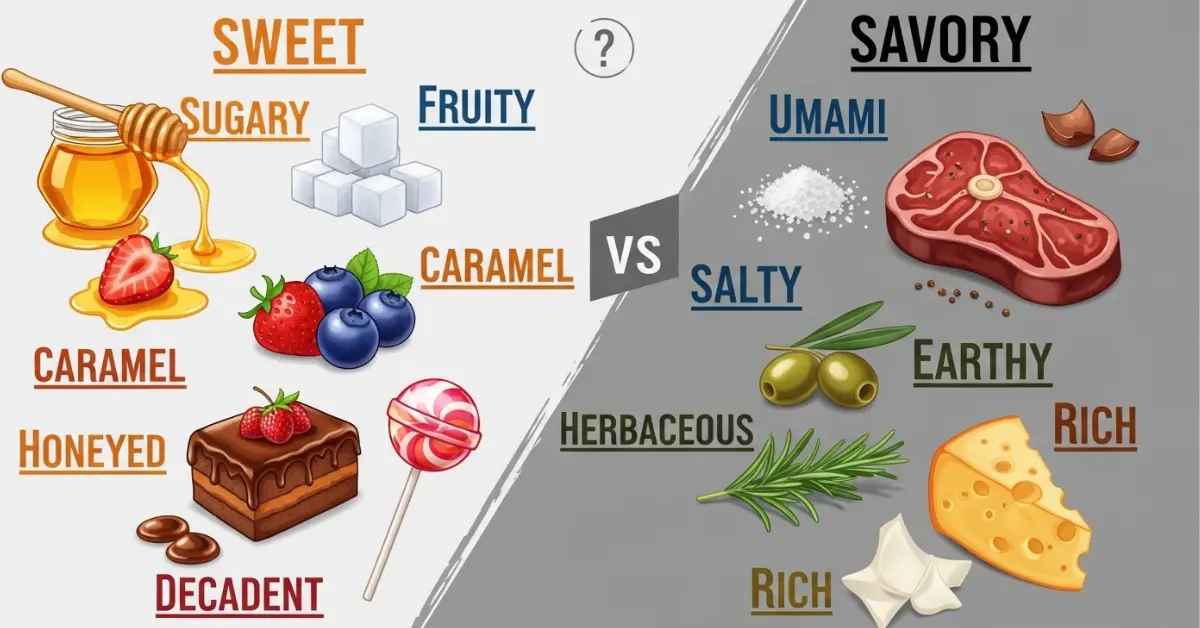
Have you ever bitten into a chocolate cake and instantly felt a rush of happiness? Or tasted a perfectly seasoned pizza and felt your taste buds dance? These contrasting experiences are defined by two key flavor profiles: sweet and savory.
Sweet flavors, like honey or candy, trigger our brain’s pleasure centers and give a sense of comfort and joy.
Understanding the difference between sweet and savory is not just for chefs or food lovers, it helps everyone make mindful choices in cooking, dining, and even in understanding cultural food habits.
Pronunciation:
- Sweet: US /swit/, UK /swiːt/
- Savory: US /ˈseɪvəri/, UK /ˈseɪvəri/
Why the Difference Between Sweet and Savory Matters
Recognizing the difference between sweet and savory is essential for several reasons. For learners, it builds awareness of flavors and helps in cooking, . For experts like chefs and nutritionists, it aids in crafting meals that balance taste, and nutrition.
Difference Between Sweet and Savory
Key Points of Difference
Basic Taste Profile
- Sweet: Sugary, pleasant, often associated with desserts.
- Examples: Chocolate, honey
- Savory: Rich, salty, umami, often found in main meals.
- Examples: Steak, soy sauce
Ingredients Used
- Sweet: Sugar, syrups, fruits
- Examples: Apple pie, candy cane
- Savory: Salt, herbs, spices
- Examples: Roasted chicken, garlic bread
Occasion of Consumption
- Sweet: Snacks, desserts, celebrations
- Examples: Birthday cake, ice cream
- Savory: Main meals, snacks, appetizers
- Examples: Pizza, nachos
Cultural Significance
- Sweet: Symbolizes reward and pleasure
- Examples: Chocolate on Valentine’s Day, honey in festivals
- Savory: Symbolizes sustenance and nourishment
- Examples: Thanksgiving turkey, curry dishes
Impact on Mood
- Sweet: Energizing, comforting
- Examples: Hot cocoa, donuts
- Savory: Satisfying, grounding
- Examples: Beef stew, lasagna
Preparation Method
- Sweet: Often baked, mixed with sugar, or chilled
- Examples: Cupcakes, puddings
- Savory: Cooked, roasted, or sautéed with seasonings
- Examples: Grilled vegetables, meatballs
Storage Requirements
- Sweet: Can often be stored for long (candies, dry cakes)
- Examples: Biscuit jars, chocolate bars
- Savory: Usually needs refrigeration or fresh consumption
- Examples: Sandwiches, cooked meats
Health Considerations
- Sweet: Excess can lead to diabetes or weight gain
- Examples: Sugary soda, candy
- Savory: Excess salt can increase blood pressure
- Examples: Fries, cured meats
Textural Experience
- Sweet: Often soft, creamy, or sticky
- Examples: Fudge, jelly
- Savory: Can be chewy, crisp, or hearty
- Examples: Crackers, roasted nuts
Role in Culinary Arts
- Sweet: Used in desserts, pastries, beverages
- Examples: Cheesecake, smoothies
- Savory: Used in main courses, soups, sauces
- Examples: Pasta, stir-fry
Nature and Behavior of Sweet and Savory
- Sweet: Invites comfort, pleasure, and sometimes indulgence. People seek sweet foods for emotional satisfaction.
- Savory: Provides satisfaction, fullness, and complexity. People choose savory foods for sustenance and flavor depth.
Why People Are Confused About Their Use
Confusion often arises when foods mix both profile. Cultural differences and personal taste preferences also blur the lines
Which Is Better in What Situation
- Sweet: Ideal for celebrations, desserts, and snacks. Sweet treats enhance joy, relieve stress, and make moments memorable. A slice of cake after dinner can elevate an entire evening.
- Savory: Best for main meals, lunch, or dinner. Savory foods provide sustenance, energy, and complex flavors that satisfy hunger effectively. A hearty savory dish like stew warms both body and soul.
Use in Metaphors and Similes
- Sweet: “Her smile was as sweet as honey.” (positive)
- Savory: “The experience was savory, full of depth and richness.” (neutral)
Connotative Meaning:
- Sweet: Positive, comforting. Example: Sweet victory.
- Savory: Neutral to positive, satisfying. Example: Savory experience.
Idioms and Proverbs
- Sweet tooth – love for sweet foods. Example: She has a sweet tooth for chocolate.
- Cut the mustard (savory) – meet expectations. Example: His cooking really cut the mustard.
Literary References
- “Sweetness and Light” – Matthew Arnold, Essay, 1869
- “Savory Tales” – Fiction anthology, Various authors, 2010
Movies on Keywords
- Sweet: Sweet Home Alabama (2002, USA)
- Savory: Savory Tales (2010, UK)
Frequently Asked Questions
What defines sweet and savory? Sweet: Sugary or dessert-like taste; Savory: salty, umami, rich flavors.
Can a food be both sweet and savory? Yes, examples include salted caramel or teriyaki chicken.
Which is healthier? Depends on ingredients and moderation; both can be balanced in diet.
Why are some people confused? Mixed flavors, cultural differences, and personal taste preferences.
How are they used in cooking? Sweet: desserts, snacks; Savory: main meals, sauces, soups.
Environmental and Social Use
Both flavors support agriculture and food industry diversity. They shape diets, festivals, and global cuisine.
Final Words
Sweet and savory each have unique identities that influence our taste, and emotions. Appreciating both enhances culinary skills, social experiences, and daily life enjoyment.
Conclusion
Understanding the difference between sweet and savory enriches our relationship with food. Both play essential roles in meals, culture, and emotions. By recognizing these differences, we can cook, eat, and enjoy foods more mindfully life.

I am a professional English article writer with expertise in creating clear, well-researched, and engaging content. I specialize in writing informative articles that maintain accuracy, strong structure, and a polished tone. My work reflects a deep understanding of grammar, vocabulary, and audience needs. I am committed to delivering high-quality content that communicates ideas effectively and adds value to readers.