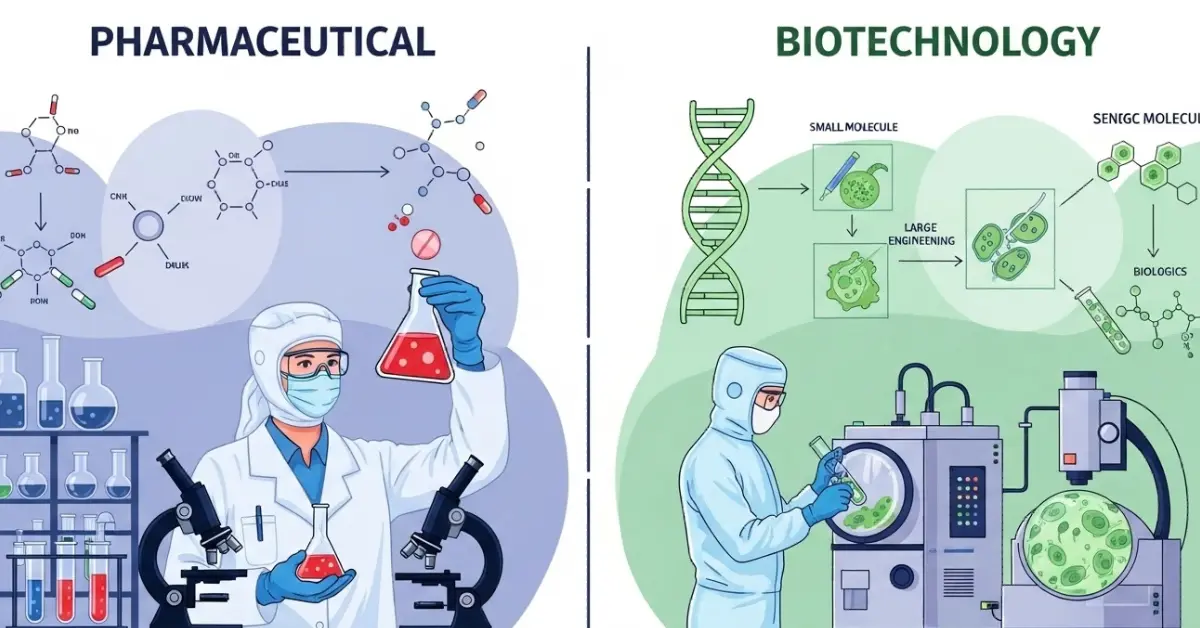
One day, two science teams wanted to make new medicine. The first team worked in a lab with many chemicals. They mixed different powders and liquids to make a pill. The second team worked with tiny living things like cells and bacteria. They used these living parts to make medicine that can help sick people.
This small story shows the difference between pharma and biotech. Pharma means making medicine mainly with chemicals in a lab. Biotech means using living things like cells, plants, or bacteria to make medicine.
Key Difference Between the Both
The main difference between pharma and biotech is how medicine is made. Pharma mostly uses chemicals. Biotech uses living things like cells or bacteria.
Why It Is Important to Know the Difference
Knowing the difference between pharma and biotech helps learners understand modern science. Doctors, scientists, and students learn how medicines are created. This knowledge helps people trust science and new treatments.
Pronunciation
Pharma
- US: FAR-muh
- UK: FAH-muh
Biotech
- US: BY-oh-tek
- UK: BY-oh-tek
Now let us look at the difference between pharma and biotech in simple terms.
Difference Between Pharma and Biotech
1. What They Use
Pharma uses chemicals to make drugs. Biotech uses living cells or bacteria.
Examples:
- A pharma company makes a pain tablet with chemicals.
- A biotech company grows cells to make a medicine.
2. Type of Science
Pharma is mostly chemistry. Biotech is biology.
Examples:
- Pharma scientists mix chemical compounds.
- Biotech scientists study DNA and cells.
3. How Medicine Is Made
Pharma mixes chemicals in labs. Biotech grows living cells.
Examples:
- A pharma lab makes a cold medicine pill.
- A biotech lab grows bacteria to make insulin.
4. Type of Medicines
Pharma often makes pills and tablets. Biotech makes special drugs from living systems.
Examples:
- A pharma company makes headache tablets.
- A biotech company makes vaccines.
5. Tools Used
Pharma uses chemical tools and machines. Biotech uses microscopes and cell labs.
Examples:
- Pharma workers use mixers and lab bottles.
- Biotech workers use cell culture tools.
6. Speed of Work
Pharma medicines can sometimes be made faster. Biotech medicines may take longer.
Examples:
- A pharma drug may be produced quickly.
- A biotech drug may need time for cells to grow.
7. Size of Drugs
Pharma drugs are small chemical molecules. Biotech drugs are larger and made from proteins.
Examples:
- A small chemical tablet is pharma medicine.
- A protein-based medicine is biotech.
8. Source
Pharma drugs come from chemical reactions. Biotech drugs come from living sources.
Examples:
- Pharma makes medicine in chemical labs.
- Biotech uses bacteria or plants.
9. Research Method
Pharma tests chemical formulas. Biotech studies genes and cells.
Examples:
- Pharma tests a new chemical compound.
- Biotech studies DNA to make medicine.
10. Field of Work
Pharma works mostly in drug chemistry. Biotech works in life science.
Examples:
- Pharma scientists study chemical reactions.
- Biotech scientists study living organisms.
Nature and Behaviour
Pharma: Pharma companies focus on chemical drugs. They work with chemical formulas and lab testing.
Biotech: Biotech companies focus on living systems. They study cells, DNA, and proteins to make medicine.
Why People Are Confused
People get confused because both pharma and biotech make medicines. Both work in labs and help treat diseases, so they seem similar.
Which Is Better in What Situation?
Pharma: Pharma is better for making common medicines like pain tablets or cold drugs. These drugs are easier to produce and can help many people quickly.
Biotech: Biotech is better for complex diseases like cancer or genetic problems.
Use in Metaphors and Similes
- “The biotech lab is like a tiny living factory.”
- “The pharma lab works like a big mixing kitchen.”
Connotative Meaning
Pharma – Neutral Examples:
- Pharma companies make many medicines.
- Pharma research helps treat illness.
Biotech – Positive or Neutral Examples:
- Biotech helps create modern vaccines.
- Biotech science studies living cells.
Idioms or Proverbs (Science Context)
- “Science saves lives.” Example: Pharma and biotech research help doctors treat patients.
- “Knowledge is power.” Example: Learning about biotech and pharma helps scientists make better medicines.
Works in Literature
Pharma
- The Billion Dollar Molecule – Science/Business book, Barry Werth, 1994
Biotech
- Biotechnology for Beginners – Science book, Reinhard Renneberg, 2008
Movies Related to the Topic
Biotech / Pharma Themes
- Contagion (2011, USA)
- Extraordinary Measures (2010, USA)
Frequently Asked Questions
1. What is the main difference between pharma and biotech? Pharma uses chemicals to make medicine. Biotech uses living cells and organisms.
2. Do both make medicine? Yes, both fields make drugs to treat diseases.
3. Which field is newer? Biotech is newer because it uses modern biology and gene science.
4. Can pharma and biotech work together? Yes, many companies use both methods to make better medicines.
5. Why are biotech drugs special? They can treat complex diseases using proteins or cells.
How Both Are Useful for Surroundings
Pharma helps make common medicines people use every day. Biotech helps create new treatments for serious diseases. Together they improve healthcare and save lives.
Final Words for Both
Pharma and biotech are important parts of modern medicine. One uses chemicals, and the other uses living systems. Both help doctors treat illness and improve health.
Conclusion
The difference between pharma and biotech is mainly in how medicines are made. Pharma uses chemical compounds to create drugs, while biotech uses proteins. Both fields work in laboratories and aim to help people recover from diseases.

I am a professional English article writer with expertise in creating clear, well-researched, and engaging content. I specialize in writing informative articles that maintain accuracy, strong structure, and a polished tone. My work reflects a deep understanding of grammar, vocabulary, and audience needs. I am committed to delivering high-quality content that communicates ideas effectively and adds value to readers.