Imagine you are at a playground, and someone suddenly falls. Two people run to help.
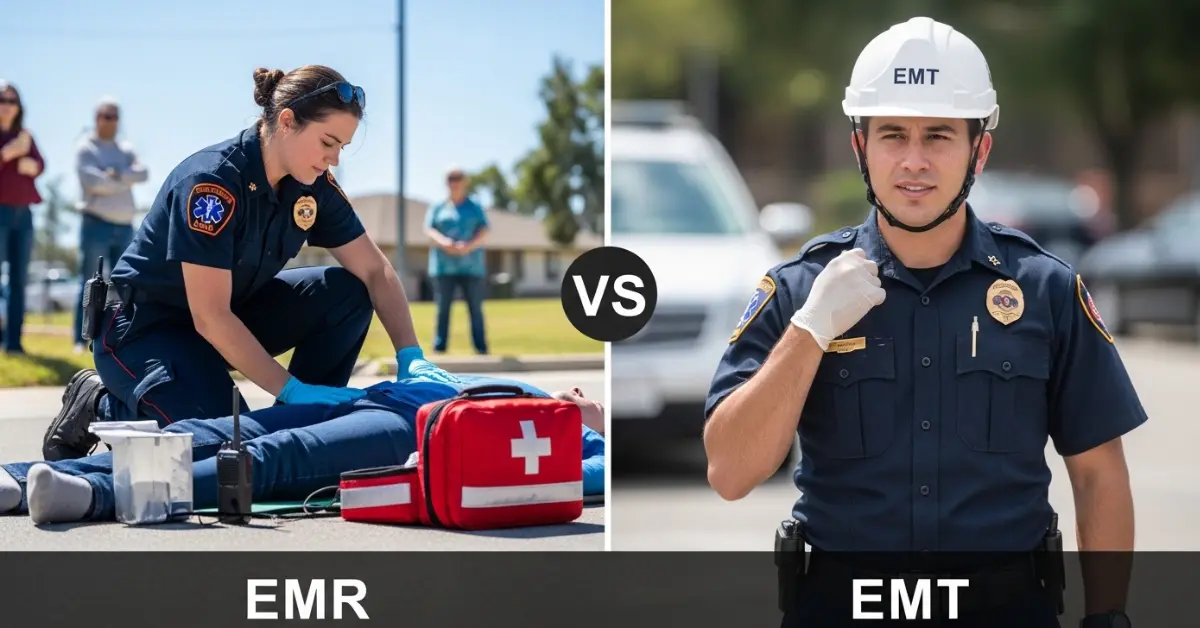
One quickly checks if the person is breathing and has a pulse. The other starts more serious medical care. These two are EMR and EMT.
Many people are curious about the difference between EMR and EMT.
EMR stands for Emergency Medical Responder.
EMT means Emergency Medical Technician. EMRs provide basic first aid and help until the ambulance arrives.
Both roles save lives. Understanding their jobs helps communities stay safe and prepared.
Pronunciation:
- EMR: US /ˌiː.ɛmˈɑːr/, UK /ˌiː.ɛmˈɑː/
- EMT: US /ˌiː.ɛmˈtiː/, UK /ˌiː.ɛmˈtiː/.
Why Knowing the Difference Between EMR and EMT Matters
Understanding the difference between EMR and EMT is important because it tells us what type of care each can provide.
- EMRs give fast help like checking breathing, doing CPR, or stopping bleeding.
- EMTs give advanced help like giving medicines, using oxygen, or starting IVs.
Students, volunteers, and professionals must know these roles to work together during emergencies.
Communities are safer when everyone knows what EMRs and EMTs can do. Quick and proper help saves lives.
10 Key Differences Between EMR and EMT
Level of Training
- EMR: Learns basic first aid, CPR, and safety rules. Example: Helping someone who fainted. Example: Stopping a small cut from bleeding.
- EMT: Learns advanced medical skills and emergency procedures. Example: Giving oxygen to a patient with heart problems. Example: Using a defibrillator on someone who collapsed.
Scope of Work
- EMR: Can only do basic first aid. Example: Applies a bandage. Example: Checks pulse or breathing.
- EMT: Can do advanced medical care. Example: Starts IV lines. Example: Gives emergency medicine.
Who Arrives First
- EMR: Usually first to arrive at the scene. Example: Provides CPR while waiting for ambulance. Example: Stabilizes a broken arm.
- EMT: Arrives later with ambulance and medical equipment. Example: Takes the patient to hospital. Example: Monitors heart rate and breathing.
Equipment Use
- EMR: Uses basic tools like bandages, gloves, and splints. Example: Putting a splint on a wrist. Example: Measuring blood pressure.
- EMT: Uses advanced tools like oxygen machines, defibrillators, and monitors. Example: Operating oxygen mask. Example: Using cardiac monitoring equipment.
Decision-Making
- EMR: Follows rules and asks for help when needed. Example: Calls ambulance after giving CPR. Example: Uses first aid kit only.
- EMT: Can make decisions during emergencies. Example: Chooses which patient needs care first. Example: Adjusts treatment based on patient’s condition.
Medical Knowledge
- EMR: Knows basic body parts and emergency care. Example: Recognizes choking. Example: Spots signs of shock.
- EMT: Knows advanced medical procedures. Example: Reads heart monitor results. Example: Treats fractures with medicine and proper care.
Course Duration
- EMR: About 50 hours of training.
- EMT: About 120–150 hours of training.
Job Level
- EMR: Entry-level first responder.
- EMT: Professional responder, can become paramedic.
Legal Responsibility
- EMR: Limited responsibility, must call higher authority.
- EMT: Can decide treatment on scene, higher responsibility.
Community Role
- EMR: Helps in small emergencies like at schools or events.
- EMT: Handles serious emergencies like accidents or disasters.
Nature and Behavior of EMR and EMT
- EMR: Quick, calm, focused on immediate help.
- EMT: Skilled, confident, ready to handle complex medical situations.
Why People Get Confused
Both EMRs and EMTs wear uniforms, go to emergencies, and save lives. The main difference is training, equipment, and responsibilities, which many people do not know.
Which is Better in What Situation
- EMR: Best for quick first aid and minor injuries. Good in schools, parks, or small events.
Metaphors and Similes
- EMR: “Like a first light in the dark” – quick help.
- EMT: “Like a skilled doctor in a storm” – advanced care.
Connotative Meaning
- EMR: Positive – fast, helpful, lifesaving.
- EMT: Positive – skilled, strong, lifesaving.
Idioms or Proverbs
- “Time is of the essence” – important for both EMRs and EMTs. Example: EMR acts quickly because time is of the essence. Example: EMT saves lives knowing time is of the essence.
Works in Literature
- Emergency First Responders, Drama, J. Smith, 2010
- Life on the Line, Memoir, K. Lee, 2015
Movies
- First Response, 2018, US
- Paramedic: The Story, 2020, UK
FAQs
- What is the main difference?
- EMR gives basic care; EMT gives advanced care.
- Can EMRs give medicine?
- No, only EMTs can give certain medicines.
- Who usually comes first?
- EMRs usually arrive first.
- Do EMRs and EMTs have the same training?
- No, EMTs are trained more.
- Can an EMR become an EMT?
- Yes, after completing more training.
How They Help Communities
Both EMRs and EMTs save lives, prevent injuries from getting worse, and respond during accidents and disasters. Communities are stronger and safer because they are ready for emergencies.
Final Words
EMRs and EMTs are heroes of emergency care. Knowing the difference between EMR and EMT helps communities get fast and proper help during emergencies. Both work together every day to save lives.
Conclusion:
The difference between EMR and EMT is important for students, workers, and communities. EMRs provide quick first aid, while EMTs provide advanced care. Both work together to save lives during emergencies, accidents, or disasters. Understanding their roles ensures faster help, safer communities, and better coordination during crises. Every second counts, and every skill of EMRs and EMTs can make the difference between life and death. Communities and learners benefit when people know their responsibilities clearly.

I am a professional English article writer with expertise in creating clear, well-researched, and engaging content. I specialize in writing informative articles that maintain accuracy, strong structure, and a polished tone. My work reflects a deep understanding of grammar, vocabulary, and audience needs. I am committed to delivering high-quality content that communicates ideas effectively and adds value to readers.