One day, Ali went to a small shop to buy chocolate. The shopkeeper had bought the chocolate from a market earlier. The money the shopkeeper paid to get the chocolate was the cost. But the money Ali paid to buy the chocolate from the shop was the price.
This small story helps us understand the difference between cost and price. Many people think these words mean the same thing, but they are not the same. The difference between cost and price is easy to learn when we look at real life examples.
Key Difference Between the Both
The main difference between cost and price is simple.
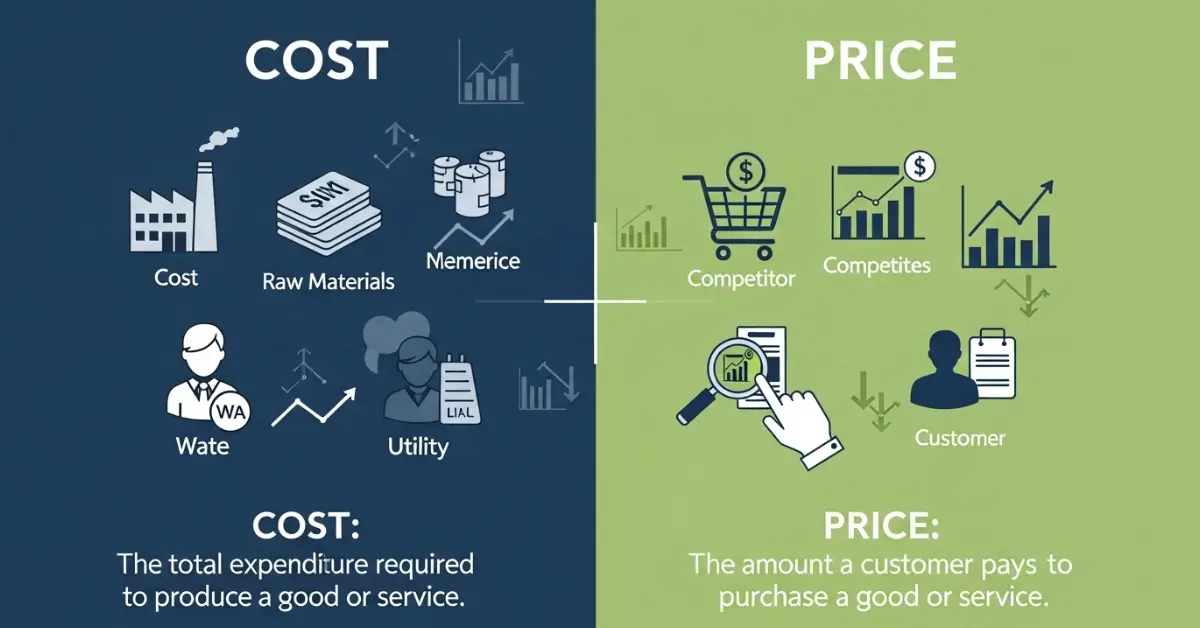
Cost is the money needed to make or buy something. Price is the money a customer pays to buy that thing.
Why Knowing the Difference Is Important
Knowing the difference between cost and price is helpful for students and business people.
Students learn how money works in the world. Shop owners learn how to earn profit and run their shops.
This knowledge helps businesses grow and helps people spend money wisely.
Pronunciation
Cost US: /kawst/ UK: /kost/
Price US: /praɪs/ UK: /praɪs/
Now that we know the meaning of these words, let us explore them more closely.
Difference Between Cost and Price
Basic Meaning
Cost: Money spent to make or get something. Examples:
- A baker spends $2 to make bread.
- A toy maker spends money to make toys.
Price: Money a buyer pays to buy something. Examples:
- The bread sells for $4.
- The toy sells for $10.
Who Pays It
Cost: The seller or maker pays it. Examples:
- A farmer pays for seeds.
- A shop owner buys goods.
Price: The buyer pays it. Examples:
- A person buys fruit.
- A child buys a candy.
Why It Exists
Cost: Needed to make products. Examples:
- Money for wood to make a chair.
- Money for milk to make cheese.
Price: Needed to sell products. Examples:
- The chair price in the shop.
- The cheese price in the store.
Profit Connection
Cost: Lower cost can help make more profit. Examples:
- A factory saves energy.
- A shop buys goods cheaply.
Price: Higher price can give profit. Examples:
- A phone sells for more than its cost.
- A dress sells for a higher price.
Where It Is Used
Cost: Used inside a business. Examples:
- Making cost of bread.
- Cost of packing boxes.
Price: Seen by customers. Examples:
- Price tag on clothes.
- Price list in a store.
Change or Stay Same
Cost: Often stays steady. Examples:
- Rent cost each month.
- Worker salary cost.
Price: Can change often. Examples:
- Sale price in a shop.
- Higher price during high demand.
How It Is Found
Cost: Found by adding expenses. Examples:
- Material cost.
- Transport cost.
Price: Set by the seller. Examples:
- Store price for shoes.
- Restaurant price for meals.
Role in Business
Cost: Helps plan spending. Examples:
- Budget for making products.
- Planning factory expenses.
Price: Helps earn money. Examples:
- Selling books in a shop.
- Selling fruit in a market.
What Affects It
Cost: Affected by labor and materials. Examples:
- Cotton cost for clothes.
- Worker wages.
Price: Affected by demand and brand. Examples:
- Famous brands charge more.
- Rare items have higher prices.
Decision Making
Cost: Helps decide what to produce. Examples:
- A company stops making costly items.
- A baker reduces expensive recipes.
Price: Helps attract buyers. Examples:
- Lower price for more sales.
- Special sale price in holidays.
Nature and Behaviour
Cost: Cost is inside the business. It shows how much money is spent to make things.
Price: Price is outside the business. Customers see the price when they buy products.
Why People Get Confused
People get confused because both words talk about money. In daily talk, people often say cost when they mean price.
For example someone may ask, “What is the cost of this phone?” but they really mean the selling price.
Which Is Better in What Situation
Cost in Planning Cost is important when making products. A business must know how much money it spends. If the cost is too high, the company may lose money. So knowing cost helps a business stay safe and plan better.
Price in Selling Price is important when selling products. Customers decide to buy things by looking at the price. A fair price attracts more buyers and helps a shop sell more items.
Use in Metaphors and Similes
Examples:
- Success comes at a cost.
- Freedom has a cost.
- The price of fame can be stress.
- The price of mistakes can be loss.
Connotative Meaning
Cost Usually neutral. Example: The cost of the house was high.
Price Neutral but sometimes negative when talking about sacrifice. Example: The price of lying is losing trust.
Idioms and Proverbs
Cost an arm and a leg Meaning: Very expensive Example: That car costs an arm and a leg.
At any cost Meaning: No matter what happens Example: She wanted to win the game at any cost.
Pay the price Meaning: Face the result of an action Example: If you cheat, you will pay the price.
Works in Literature
- The Price – Play by Arthur Miller, 1968
- At Any Cost – Novel by Tom Clancy and Peter Telep, 2012
Movies Related to the Keywords
- The Price – 2017, USA
- The Price of Fame – 2017, France
Frequently Asked Questions
What is the cost? Cost is the money needed to make or buy something.
What is the price? Price is the money a customer pays to buy something.
Is price always higher than cost? Usually yes, because businesses want profit.
Why should students learn this difference? It helps them understand money and business.
Can the price change? Yes, price can change because of demand and sales.
How Both Help Our Surroundings
Cost and price help businesses and markets work smoothly. Farmers, shopkeepers, and companies use them every day.
Final Words for Both
Cost shows the money spent to make something. Price shows the money people pay to buy it. Both are important for trade and business.
Conclusion:
The difference between cost and price is simple but very important.
Cost is the money spent to make or buy a product. Price is the money customers pay to purchase that product.
When we understand the difference between cost and price, we learn how businesses earn profit and how markets work.
This knowledge helps students, buyers, and sellers make better decisions.

I am a professional English article writer with expertise in creating clear, well-researched, and engaging content. I specialize in writing informative articles that maintain accuracy, strong structure, and a polished tone. My work reflects a deep understanding of grammar, vocabulary, and audience needs. I am committed to delivering high-quality content that communicates ideas effectively and adds value to readers.