One evening, a family went to a small Mexican restaurant. The children saw two dishes on the menu: chimichanga and enchilada. Both looked like rolled tortillas filled with tasty food. But when the food came, they noticed something interesting. One dish was crispy and golden because it was fried. The other dish was soft and covered with sauce and cheese.
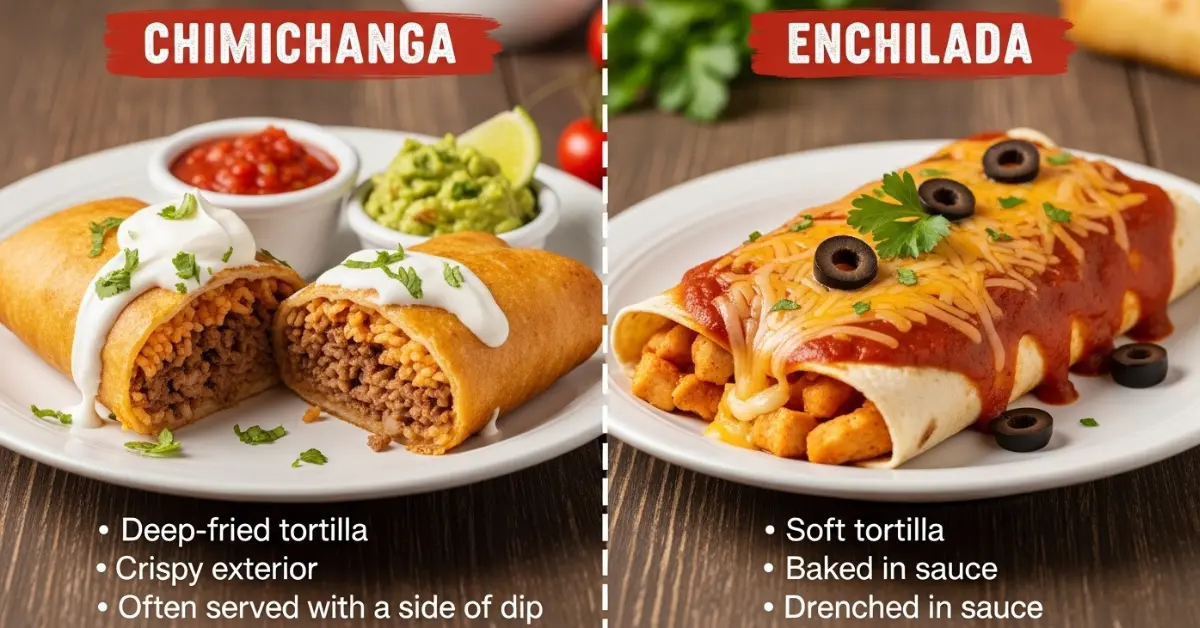
This little moment shows the difference between chimichanga and enchilada. A chimichanga is a tortilla filled with meat or beans and then fried until it becomes crispy. An enchilada is a tortilla filled with food and covered with sauce before baking. Learning the difference between chimichanga and enchilada helps people understand Mexican food better.
Key Difference Between the Both
The main difference between chimichanga and enchilada is how they are cooked. A chimichanga is fried and crispy. An enchilada is baked and soft with sauce.
Why It Is Important to Know the Difference
Knowing the difference between chimichanga and enchilada helps food lovers and students. It also helps people order the food they enjoy the most. Understanding foods from different cultures also helps people appreciate world cuisine.
Pronunciation
Chimichanga
- US: chi-mee-CHANG-uh
- UK: chi-mee-CHANG-uh
Enchilada
- US: en-chi-LAH-duh
- UK: en-chi-LAH-duh
Now let us see the difference between chimichanga and enchilada in simple points.
Difference Between Chimichanga and Enchilada
1. Cooking Method
A chimichanga is deep-fried. An enchilada is baked.
Examples:
- The cook fried the chimichanga until it was crispy.
- The enchilada baked in the oven with sauce.
2. Texture
Chimichangas are crispy. Enchiladas are soft.
Examples:
- The chimichanga had a crunchy bite.
- The enchilada felt soft and warm.
3. Sauce
Chimichangas may have sauce on top or on the side. Enchiladas are covered with sauce.
Examples:
- The chimichanga had salsa on the side.
- The enchilada had red sauce and cheese on top.
4. Shape
Chimichangas are tightly folded like a burrito. Enchiladas are rolled tortillas.
Examples:
- The chimichanga looked like a small fried burrito.
- The enchilada was a rolled tortilla.
5. Cooking Oil
Chimichangas are cooked in oil. Enchiladas are usually baked without frying.
Examples:
- The chef placed the chimichanga in hot oil.
- The enchilada went straight into the oven.
6. Popular Taste
Chimichangas taste crispy and rich. Enchiladas taste saucy and soft.
Examples:
- The crispy chimichanga tasted crunchy.
- The enchilada tasted juicy with sauce.
7. Origin Style
Chimichangas are popular in Tex-Mex food. Enchiladas come from traditional Mexican cooking.
Examples:
- Many Tex-Mex restaurants serve chimichangas.
- Mexican homes often cook enchiladas.
8. Serving Style
Chimichangas are served with toppings like sour cream. Enchiladas are served with sauce and cheese.
Examples:
- The chimichanga had guacamole and cream.
- The enchilada had melted cheese on top.
9. Appearance
Chimichangas look golden brown. Enchiladas look red or green because of sauce.
Examples:
- The chimichanga was golden and crispy.
- The enchilada was covered with red sauce.
10. Eating Experience
Chimichangas feel crunchy. Enchiladas feel soft and saucy.
Examples:
- The chimichanga made a crunch sound.
- The enchilada melted in the mouth.
Nature and Behaviour
Chimichanga: Chimichanga is a crispy fried tortilla dish. It usually contains meat, beans, rice, or cheese and is served with toppings.
Enchilada: Enchilada is a soft rolled tortilla filled with meat, beans, or cheese.
Why People Are Confused
People often confuse them because both dishes use tortillas and fillings. Their rolled shape also makes them look similar.
Which Is Better in What Situation?
Chimichanga: Chimichanga is better if someone likes crunchy fried food. It is great when people want a rich and crispy meal.
Enchilada: Enchilada is better when someone wants a soft dish with lots of sauce and flavor. It is often lighter than fried food.
Use in Metaphors and Similes
- “The fried tortilla was crispy like a chimichanga.”
- “The dish was covered in sauce like an enchilada.”
Connotative Meaning
Chimichanga – Positive Examples:
- The chimichanga looked golden and delicious.
- We ordered chimichangas for dinner.
Enchilada – Positive Examples:
- The enchilada tasted rich with sauce.
- She loves homemade enchiladas.
Idioms or Proverbs Related to Food
- “The proof is in the pudding.” Example: The proof is in the pudding—taste the chimichanga to know if it is good.
- “Too many cooks spoil the broth.” Example: Too many cooks in the kitchen can ruin the enchiladas.
Works in Literature
- The Tex-Mex Cookbook – Cookbook, Robb Walsh, 2004
- Mexico: The Cookbook – Cookbook, Margarita Carrillo Arronte, 2014
Movies Related to Mexican Food Culture
- Tortilla Soup (2001, USA)
- Like Water for Chocolate (1992, Mexico)
Frequently Asked Questions
1. What is the main difference between chimichanga and enchilada? Chimichanga is fried and crispy, while enchilada is baked and covered with sauce.
2. Are both dishes made with tortillas? Yes, both use tortillas filled with meat, beans, or cheese.
3. Which dish is crunchier? Chimichanga is crunchier because it is fried.
4. Which dish has more sauce? Enchiladas usually have more sauce on top.
5. Are they both Mexican foods? Yes, they are part of Mexican or Tex-Mex cuisine.
How Both Are Useful for Surroundings
Both dishes bring people together during meals. They are popular in restaurants and homes as Mexican food culture around the world.
Final Words for Both
Chimichanga and enchilada may look similar, but their cooking style makes them unique. One is crispy and fried, while the other is soft and saucy.
Conclusion
The difference between chimichanga and enchilada mainly lies in how they are prepared. A chimichanga is a fried tortilla dish that becomes crispy. While an enchilada is a soft tortilla covered in sauce before baking.

I am a professional English article writer with expertise in creating clear, well-researched, and engaging content. I specialize in writing informative articles that maintain accuracy, strong structure, and a polished tone. My work reflects a deep understanding of grammar, vocabulary, and audience needs. I am committed to delivering high-quality content that communicates ideas effectively and adds value to readers.