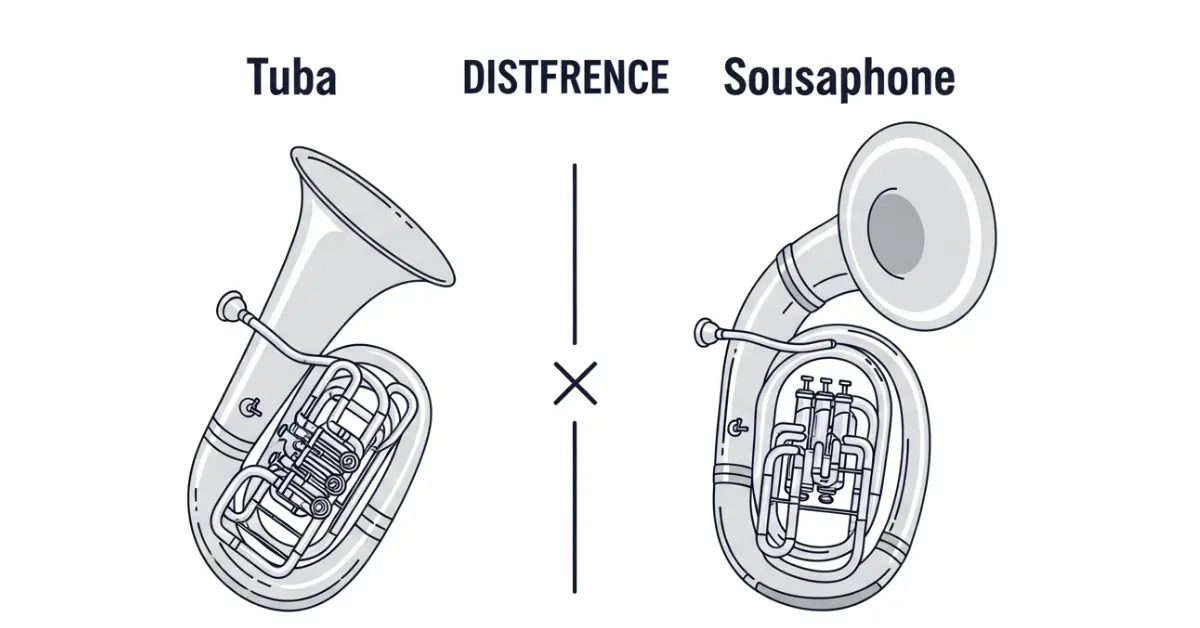
Last week I watched a school parade. A marching band was playing music on the street. I saw a big shiny instrument that made a deep sound. At first, I thought it was a tuba. Later, a friend told me it was a sousaphone. That made me curious about the difference between tuba and sousaphone.
Many people see these instruments and think they are the same. Both are large brass instruments and both make low sounds. But when you learn the difference between tuba and sousaphone, you can easily tell them apart. It also helps people understand what they see in concerts and parades. When you learn the difference between tuba and sousaphone, music becomes more interesting.
Key Difference Between the Two
The main difference is simple. A tuba is used while sitting in a concert. A sousaphone is used while walking in a marching band.
Why This Difference Is Important to Know
Students who learn music need to know which instrument to use. In a concert band, players sit and play the tuba. In a marching band, players walk and play the sousaphone.
This knowledge helps bands sound better.
Pronunciation
Tuba
US: too-buh UK: too-buh
Sousaphone
US: soo-zuh-fohn UK: soo-zuh-fohn
Now let us look at the simple difference between tuba and sousaphone.
Difference Between Tuba and Sousaphone
1. Shape
A tuba stands straight and does not wrap around the player.
A sousaphone wraps around the player’s body.
Examples: • A tuba stands next to the player. • A sousaphone goes around the player’s shoulders.
2. Use
A tuba is used in concerts.
A sousaphone is used in marching bands.
Examples: • A concert band plays with tubas. • A parade band plays with sousaphones.
3. Playing Position
A tuba is played while sitting.
A sousaphone is played while standing or walking.
Examples: • A student sits on a chair and plays the tuba. • A band member walks and plays the sousaphone.
4. Bell Direction
The tuba bell points up.
The sousaphone bell points forward.
Examples: • The tuba sends sound upward in a concert hall. • The sousaphone sends sound toward the crowd.
5. Carrying Style
A tuba is held in the lap.
A sousaphone sits on the shoulders.
Examples: • A player rests the tuba on their legs. • A player wears the sousaphone.
6. Movement
A tuba is not easy to carry while walking.
A sousaphone is made for marching.
Examples: • Tubas stay still in concerts. • Sousaphones move in parades.
7. Sound Use
A tuba blends with other instruments in a concert.
A sousaphone plays loudly in outdoor bands.
Examples: • Tubas support orchestras. • Sousaphones help marching bands stay loud.
8. Material
A tuba is usually made of brass.
A sousaphone can be brass or fiberglass.
Examples: • Many orchestras use brass tubas. • Some school bands use lighter fiberglass sousaphones.
9. Size Look
A tuba looks big but compact.
A sousaphone looks larger because it wraps around the body.
Examples: • A tuba stands beside the player. • A sousaphone circles the player.
10. Music Setting
A tuba belongs in concert music.
A sousaphone belongs in marching music.
Examples: • Classical concerts use tubas. • Football games use sousaphones.
Nature and Behaviour of Both
The tuba makes a deep and warm sound. It supports the whole band or orchestra.
The sousaphone also makes a deep sound. But it is louder so people can hear it outside.
Both instruments play the low notes in music.
Why People Are Confused About Their Use
People get confused because both instruments are big and shiny. They also sound very similar. Since they belong to the same brass family, many people think they are the same instrument.
But their shapes and uses are different.
Which Is Better in What Situation?
Tuba
A tuba is better for concerts and orchestras. Players sit while playing. The sound blends nicely with other instruments. That makes it perfect for indoor music.
Sousaphone
A sousaphone is better for parades and marching bands. Players can walk while playing it. The bell faces forward so the audience can hear the music clearly.
Use in Metaphors and Similes
Examples:
• “His voice was as deep as a tuba.” • “The band moved like a line of shining sousaphones.”
Connotative Meaning
Tuba
Positive: strong music base Example: The tuba gives power to the band.
Neutral: a large brass instrument Example: She plays the tuba in school band.
Negative: sometimes seen as heavy Example: Carrying a tuba can be tiring.
Sousaphone
Positive: parade energy Example: The sousaphone made the parade exciting.
Neutral: marching band instrument Example: He learned the sousaphone this year.
Negative: heavy to wear Example: Wearing a sousaphone all day is hard.
Idioms Related to Music
Face the music
Meaning: accept the result of your actions. Example: He forgot practice and had to face the music.
Strike the right note
Meaning: say something that people like. Example: Her speech struck the right note.
Works in Literature
• The Music Lesson – Nonfiction, Victor L. Wooten, 2008 • This Is Your Brain on Music – Nonfiction, Daniel J. Levitin, 2006
Movies About Bands and Music
• Drumline – 2002, United States • The Music Man – 1962, United States • Mr. Holland’s Opus – 1995, United States
Frequently Asked Questions
1. Are tuba and sousaphone the same?
No. They are similar but used in different settings.
2. Which one is used in parades?
The sousaphone.
3. Which one is used in concerts?
The tuba.
4. Do they sound the same?
They sound similar because both play low notes.
5. Which one is easier for marching?
The sousaphone.
How Both Are Useful for Surroundings
Both instruments make music richer. The tuba helps orchestras and concert bands sound full. The sousaphone brings energy to parades, sports games, and marching bands.
Music from these instruments brings joy to people.
Final Words for Both
The tuba is perfect for concerts and calm music. The sousaphone is perfect for parades and marching bands.
Both instruments are important in the world of music.
Conclusion:
Understanding the difference between tuba and sousaphone is simple once you know their purpose. The tuba is used in concerts where musicians sit and play. The sousaphone is made for marching bands where musicians walk and perform. Both instruments belong to the brass family and make deep bass sounds that support the music. Each instrument has a special role.

I am a professional English article writer with expertise in creating clear, well-researched, and engaging content. I specialize in writing informative articles that maintain accuracy, strong structure, and a polished tone. My work reflects a deep understanding of grammar, vocabulary, and audience needs. I am committed to delivering high-quality content that communicates ideas effectively and adds value to readers.