One day in London, a boy took his friend’s bicycle without asking. He rode it home and kept it in his garage. His parents said, “That is theft.” Later, a police officer explained that in law books, this kind of stealing is often called larceny.
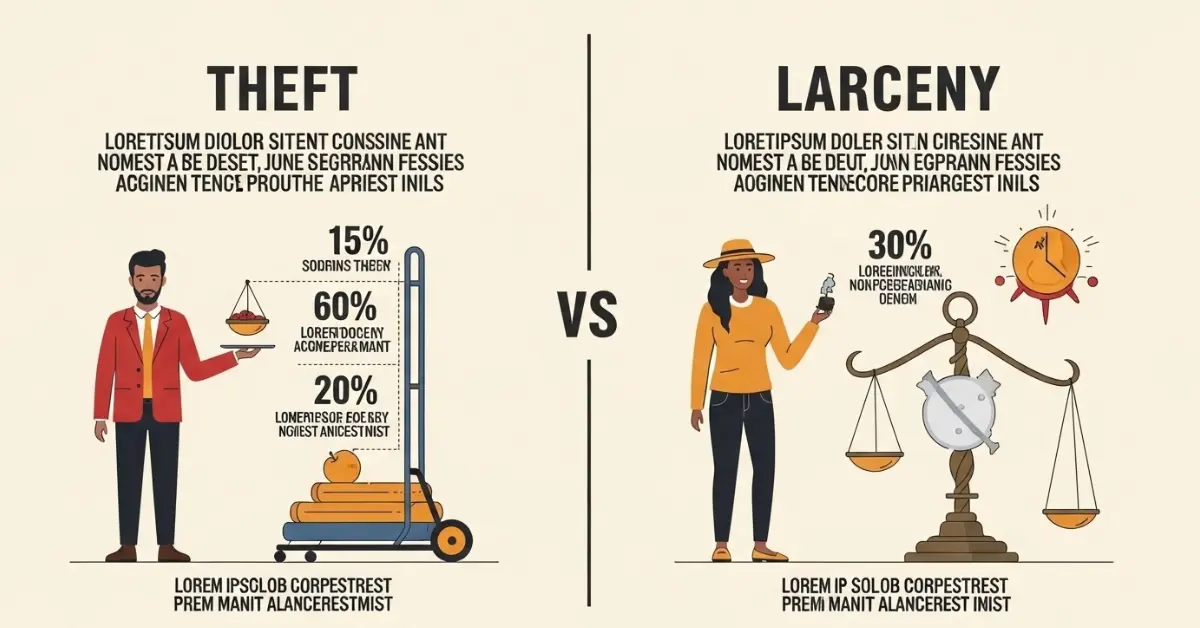
This story helps us understand the difference between theft and larceny. Both words talk about taking something that does not belong to you. But the difference between theft and larceny is mostly about how the law uses the words. Theft is a common word we use in daily life. Larceny is a legal word used in courts.
Key Difference Between Theft and Larceny
The main difference is simple:
- Theft is a general word for stealing.
- Larceny is a legal term for a specific type of stealing.
All larceny is theft, but not all theft is larceny.
Why Is It Important to Know the Difference?
It is important for students and adults to understand these words. In school books and news reports, you may read about theft. In court cases and law lessons, you may see the word larceny.
If someone wants to become a police officer, knowing the correct word is very important. Even regular people should understand these terms so they know their responsibilities. Clear understanding helps build a fair society.
Pronunciation
Theft
- US: /θeft/
- UK: /θeft/
Larceny
- US: /ˈlɑːr.sə.ni/
- UK: /ˈlɑː.sən.i/
Now let us explore the difference between theft and larceny in simple points.
Difference Between Theft and Larceny
1. Meaning
Theft It means taking someone’s property without permission. Example 1: Taking a phone from a desk without asking is theft. Example 2: Stealing money from a wallet is theft.
Larceny means taking personal property with the plan to keep it forever. Example 1: Taking a bike and never returning it is larceny. Example 2: Stealing a watch from a store shelf is larceny.
2. Type of Word
Theft Common word used in everyday talk. Example 1: News reports say “car theft.” Example 2: Teachers explain theft in school lessons.
Larceny Formal legal word. Example 1: Lawyers use the word larceny in court. Example 2: Police reports may say grand larceny.
3. Use in Law
Theft Used as a broad term in many places. Example 1: Theft can include shoplifting. Example 2: Theft can include stealing online money.
Larceny Used in specific legal systems. Example 1: Some states in the U.S. still use the word larceny. Example 2: Court documents may charge someone with larceny.
4. Property Type
Theft Can include physical or non-physical property. Example 1: Stealing a car is theft. Example 2: Stealing someone’s identity is theft.
Larceny usually refers to physical property only. Example 1: Stealing jewelry is larceny. Example 2: Taking cash from a drawer is larceny.
5. Planning
Theft May or may not be planned. Example 1: A child quickly grabs candy without thinking. Example 2: Someone forgets to pay and walks away.
Larceny usually involves clear intent to steal. Example 1: A person hides goods in a bag on purpose. Example 2: A thief plans to take and sell stolen items.
6. Value of Item
Theft Can involve items of any value. Example 1: Stealing a pencil is theft. Example 2: Stealing a car is theft.
Larceny Often divided by value (petty or grand). Example 1: Petty larceny means low-value items. Example 2: Grand larceny means high-value items.
7. Place of Crime
Theft Can happen anywhere. Example 1: Theft in school. Example 2: Theft in a shopping mall.
Larceny Usually recorded in legal crime reports. Example 1: Larceny case in court. Example 2: Police charge for larceny.
8. Everyday Usage
Theft: Very common word. Example 1: “Bike theft is increasing.” Example 2: “Theft is wrong.”
Larceny Less common in daily talk. Example 1: People rarely say larceny in normal conversation. Example 2: It appears more in legal news.
9. Scope
Theft Includes robbery, burglary, and shoplifting. Example 1: Robbery is a type of theft. Example 2: Shoplifting is also theft.
Larceny does not include robbery with violence. Example 1: Larceny does not involve force. Example 2: It focuses on taking property quietly.
10. Historical Use
Theft Used for many centuries in the English language. Example 1: Old English stories mention theft. Example 2: The Bible speaks about theft.
Larceny comes from old legal French. Example 1: Used in early law books. Example 2: Found in old court records.
Nature and Behavior
Theft is a wide and general idea. It covers many kinds of stealing.
Larceny is more specific. It describes stealing physical property without using force.
Why Are People Confused?
People get confused because both words mean stealing. In many cases, they are used almost the same way. Also, movies and news sometimes mix the terms.
Which Is Better in What Situation?
Theft is better when speaking in general conversation. It is easy to understand and commonly used in schools, news, and daily life. If you want to explain stealing to children, “theft” is the clearer word. It covers many types of stealing and is simple to say and remember.
Larceny is better in legal writing. In courtrooms and official documents, larceny gives a more exact meaning. It helps define the crime clearly under the law.
Metaphors and Similes
- “Time theft” means wasting time at work.
- “His idea was stolen like a larceny in the night.”
Connotative Meaning
Theft – Negative Example: “Theft harms society.”
Larceny – Negative and formal Example: “He was charged with larceny.”
Idioms and Proverbs
- “Crime doesn’t pay.” Example: Theft may bring trouble, because crime doesn’t pay.
- “Honesty is the best policy.” Example: Avoid larceny because honesty is the best policy.
Works in Literature
- Oliver Twist (Novel, Charles Dickens, 1838) – Shows theft and crime in London.
- Crime and Punishment (Novel, Fyodor Dostoevsky, 1866) – Talks about crime and guilt.
Movies About Theft
- The Italian Job (2003, USA)
- Ocean’s Eleven (2001, USA)
Five Frequently Asked Questions
1. Are theft and larceny the same? They are similar, but larceny is a legal type of theft.
2. Is all larceny theft? Yes.
3. Is all theft larceny? No. Some theft crimes are not called larceny.
4. Which word is more common? Theft is more common in daily speech.
5. Is larceny a serious crime? Yes, especially if it is grand larceny.
How Both Are Useful for Society
These words help police, courts, and citizens understand crime. Clear language makes justice fair and organized.
Final Words
Theft is the simple word for stealing. Larceny is the legal word for certain kinds of stealing.
Both words remind us to respect others’ property.
Conclusion
The difference between theft and larceny is mostly about how the words are used. Theft is a broad and simple word that means stealing. While they are very similar, their usage depends on context. Understanding these words helps students read news, understand laws, and improve vocabulary. Clear knowledge leads to better communication and responsible behavior in society.

I am a professional English article writer with expertise in creating clear, well-researched, and engaging content. I specialize in writing informative articles that maintain accuracy, strong structure, and a polished tone. My work reflects a deep understanding of grammar, vocabulary, and audience needs. I am committed to delivering high-quality content that communicates ideas effectively and adds value to readers.