I remember the first time I visited a local market. A seller asked me if I wanted a stoneware cup or a ceramic cup. I had no idea what the difference was. Stoneware and ceramic are both made from clay, but they behave very differently. Stoneware is strong, heavy, and perfect for everyday use like baking and serving meals. Ceramic is lighter, often colorful, and mostly used for decoration or light cooking. . In this guide, we will explain the differences clearly and simply, so even beginners can understand the unique qualities of each. By the end, you will know exactly which to pick for your home or creative projects.
Pronunciation:
- Stoneware – US: /ˈstoʊn.wer/ | UK: /ˈstəʊn.weər/
- Ceramic – US: /səˈræm.ɪk/ | UK: /səˈræm.ɪk/
Before we get into the details, let’s explore why these differences matter in real life.
Why Knowing the Difference Is Important
Stoneware and ceramic are part of our daily lives. Choosing the wrong type can affect cooking, durability, and cost. For example, a stoneware baking dish can last decades, while a delicate ceramic dish might crack in the oven.
Difference Between Stoneware and Ceramic
Here are 10 key differences with simple explanations and examples.
Material Composition
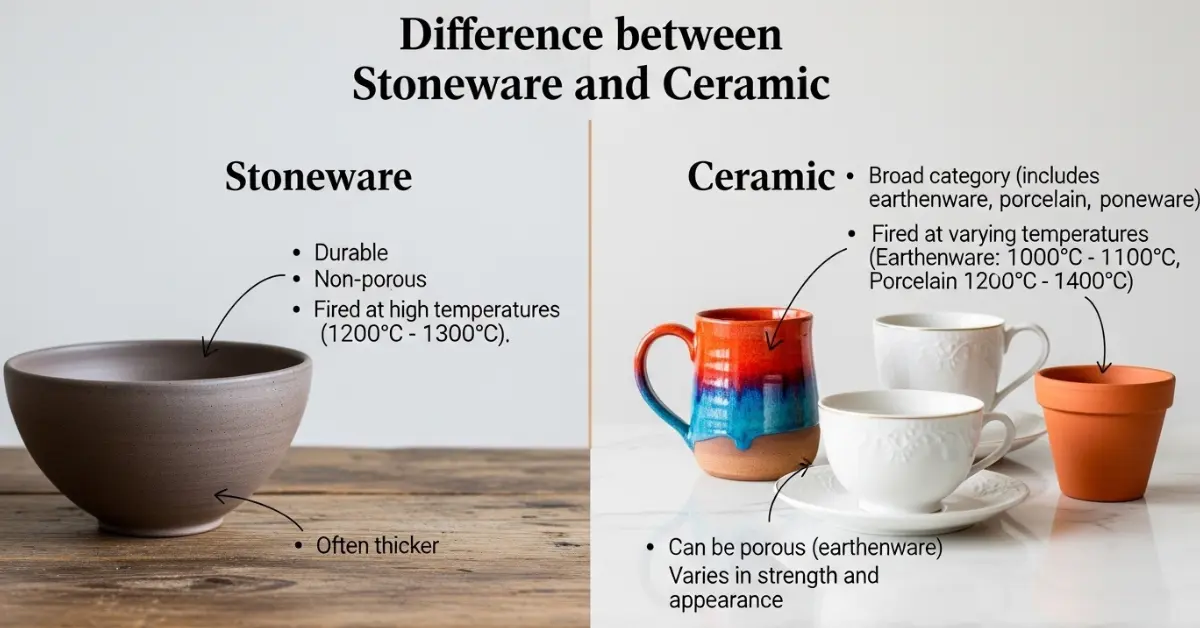
- Stoneware: Made from dense clay and fired at high temperatures, making it very strong.
- Example 1: A stoneware mug feels heavy and sturdy in your hand.
- Example 2: Stoneware casserole dishes withstand hot ovens.
- Ceramic: Made from softer clay, can be fired at lower temperatures.
- Example 1: Ceramic flowerpots are light and easy to carry.
- Example 2: Ceramic vases can have detailed designs because the clay is easier to shape.
Durability
- Stoneware: Very strong, resistant to chips and cracks.
- Example 1: Stoneware plates last for years even with daily use.
- Example 2: Stoneware soup bowls can handle hot soups without cracking.
- Ceramic: More fragile and prone to breaking.
- Example 1: A ceramic ornament can break if dropped.
- Example 2: Ceramic mugs may crack under extreme heat.
Appearance
- Stoneware: Earthy, rustic, and often matte.
- Example 1: Stoneware teapots look simple and natural.
- Example 2: Stoneware kitchen bowls have a warm brown color.
- Ceramic: Shiny, colorful, and decorative.
- Example 1: Ceramic plates can have bright floral designs.
- Example 2: Ceramic tiles come in glossy patterns for walls.
Porosity
- Stoneware: Less porous, keeps liquids without leaking.
- Example 1: Stoneware mugs keep coffee hot longer.
- Example 2: Stoneware soup bowls hold water without soaking.
- Ceramic: Can absorb moisture if not properly glazed.
- Example 1: Ceramic plant pots may need holes for drainage.
- Example 2: Ceramic decorative cups are not ideal for soups.
Cooking Use
- Stoneware: Ideal for baking, roasting, and cooking.
- Example 1: Stoneware pizza stones withstand oven heat.
- Example 2: Stoneware casserole dishes can go from fridge to oven safely.
- Ceramic: Mostly decorative or for light baking.
- Example 1: Ceramic ramekins are perfect for desserts.
- Example 2: Ceramic muffin molds can crack in high heat.
Weight
- Stoneware: Heavier and solid.
- Example 1: Stoneware pitchers feel sturdy.
- Example 2: Stoneware coffee mugs are comforting in hand.
- Ceramic: Lightweight and easy to carry.
- Example 1: Ceramic tea cups are delicate.
- Example 2: Ceramic decorative plates are easy to display.
Glazing
- Stoneware: Usually has simple, natural glazes.
- Example 1: Stoneware soup bowls often have a matte glaze.
- Example 2: Stoneware mugs have earthy tones.
- Ceramic: Can have colorful and artistic glazes.
- Example 1: Ceramic plates painted with flowers.
- Example 2: Ceramic tiles with intricate designs.
Firing Temperature
- Stoneware: Fired at high temperatures (1200–1300°C).
- Example 1: Stoneware dishes are oven safe.
- Example 2: Stoneware mugs survive daily hot liquids.
- Ceramic: Fired at lower temperatures (800–1000°C).
- Example 1: Ceramic figurines are decorative.
- Example 2: Ceramic candle holders are delicate.
Flexibility in Design
- Stoneware: Limited design; focuses on strength.
- Example 1: Stoneware plates are usually round and simple.
- Example 2: Stoneware baking dishes have standard shapes.
- Ceramic: Can be molded into many shapes and designs.
- Example 1: Ceramic animal figurines.
- Example 2: Ceramic decorative tiles for walls.
Cost
- Stoneware: More expensive due to durability.
- Example 1: Stoneware dinner sets are an investment.
- Example 2: Stoneware mugs last longer.
- Ceramic: Cheaper, widely available.
- Example 1: Ceramic cups are affordable.
- Example 2: Ceramic decorative plates are easy to buy.
Nature and Behaviour
- Stoneware: Strong, durable, functional, practical for everyday use.
- Ceramic: Light, delicate, artistic, mostly decorative.
Why People Are Confused
Both stoneware and ceramic can look similar with glazes and colors, so beginners often think they are the same. But their strength, purpose, and durability are very different.
Which Is Better in What Situation?
Stoneware: Best for daily kitchen use, baking, and dishes that must last long. Heavy and heat-resistant, it handles real cooking. Ceramic: Best for decoration, light use, and artistic purposes. It allows creative shapes, colors, and designs that make homes beautiful.
Metaphors and Similes
- Stoneware: “As strong as stoneware” – represents strength and reliability.
- Ceramic: “Like ceramic, delicate and shiny” – represents beauty and fragility.
Connotation:
- Stoneware – Positive: durability, reliability.
- Ceramic – Positive/Neutral: beauty, delicacy.
Idioms / Proverbs
- “Worth your weight in stoneware” – something valuable and strong.
- “Handle like ceramic” – treat with care.
Works in Literature
- The Pottery of Life – Fiction, Alice Monroe, 1999
- Artisan Dreams – Non-fiction, John Carver, 2005
Movies
- The Potter’s Wheel – 2012, USA
- Ceramic Dreams – 2017, UK
FAQs
Is stoneware stronger than ceramic? Yes, stoneware is more durable.
Can ceramic go in the oven? Only for low heat; high heat may crack it.
Which is heavier? Stoneware is heavier than ceramic.
Do both require glazing? Glazing prevents water absorption but is not always needed.
Are stoneware and ceramic eco-friendly? Yes, both come from natural clay.
How Both Are Useful for Surroundings
Stoneware supports daily life by providing long-lasting dishes and cookware. Ceramic enhances spaces with color, beauty, and artistic designs. Both are eco-friendly and sustainable.
Conclusion:
Stoneware is strong, reliable, and perfect for kitchen use, while ceramic is light, artistic, and ideal for decoration. Both are essential in daily life and carry a story of clay turned into art. Understanding them makes shopping, crafting, and decorating easier for everyone.

I am a professional English article writer with expertise in creating clear, well-researched, and engaging content. I specialize in writing informative articles that maintain accuracy, strong structure, and a polished tone. My work reflects a deep understanding of grammar, vocabulary, and audience needs. I am committed to delivering high-quality content that communicates ideas effectively and adds value to readers.