A few years ago, a friend played a song during a small gathering. The rhythm was slow and relaxing. Someone said, “This is reggae.” A few minutes later, another song played. It had a faster beat and people started dancing. Someone else said, “No, this is reggaeton.” Many people in the room thought both songs sounded similar because of the names. That moment clearly showed the difference between reggae and reggaeton.
The difference between reggae and reggaeton is important in music and culture. Reggae is a music style that started in Jamaica and focuses on rhythm, peace, and social messages.
Key Difference Between the Both
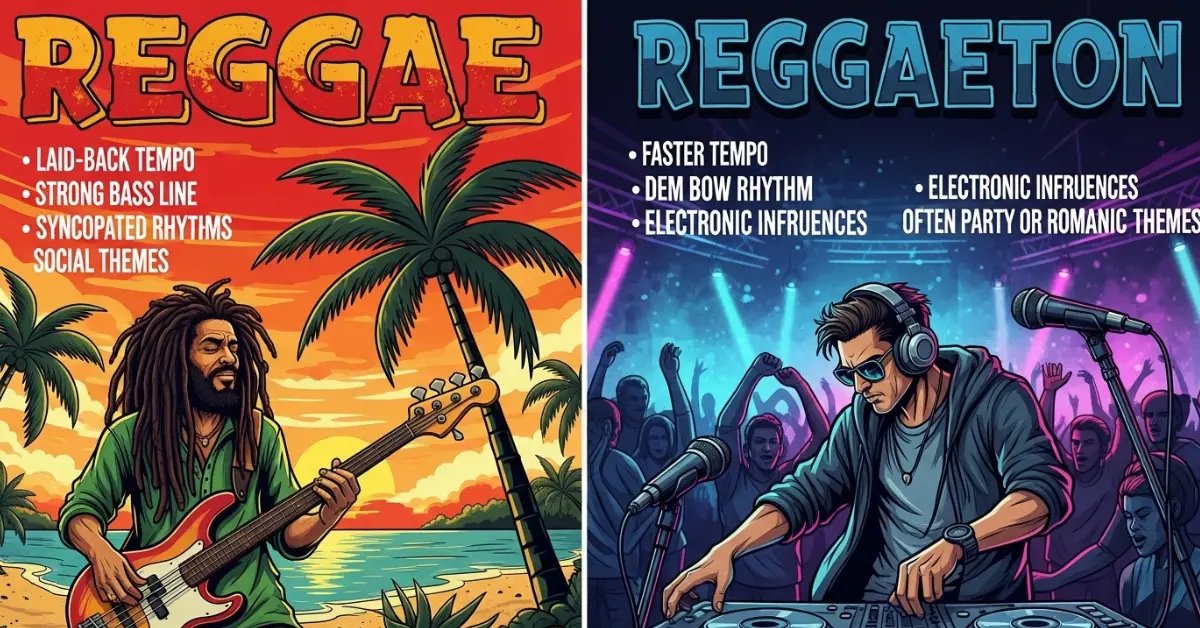
Reggae is a Jamaican music genre known for relaxed rhythm and meaningful lyrics. Reggaeton is a Latin dance music style with strong beats and party energy. One focuses on calm messages while the other focuses on dance and rhythm.
Why Their Difference Is Important for Learners and Experts
Each genre represents different countries, languages, and social ideas.
Reggae often talks about peace, struggle, and unity. It reflects Jamaican history and culture. Reggaeton shows Latin urban culture and modern dance music trends.
When learners know these differences, they respect cultural roots.
Reggae
- US: /ˈreɡeɪ/
- UK: /ˈreɡeɪ/
Reggaeton
- US: /ˌreɡeɪˈtoʊn/
- UK: /ˌreɡeɪˈtɒn/
Both words sound similar at the start, which is why people confuse them. Now let us explore the full difference between reggae and reggaeton in detail.
Difference Between Reggae and Reggaeton
1. Origin
Reggae: Reggae began in Jamaica in the late 1960s.
Examples
- Songs by Bob Marley show classic reggae sound.
- Jimmy Cliff also helped spread reggae worldwide.
Reggaeton: Reggaeton began in Puerto Rico during the 1990s.
Examples
- Daddy Yankee made the style famous.
- Don Omar created many popular songs.
2. Rhythm and Beat
Reggae: Reggae has a slow and relaxed rhythm.
Examples
- The guitar plays soft offbeat sounds.
- The drums create a calm groove.
Reggaeton: Reggaeton uses a strong dance beat called the dembow rhythm.
Examples
- The drum beat is fast and energetic.
- Electronic sounds are often added.
3. Language
Reggae: Reggae songs are mostly in English or Jamaican patois.
Examples
- Many songs talk about social issues.
- Some songs share spiritual messages.
Reggaeton: Reggaeton songs are mostly in Spanish.
Examples
- Lyrics often focus on dance and party life.
- Some songs talk about urban culture.
4. Purpose of Music
Reggae: Reggae often sends a message about peace and freedom.
Examples
- Songs about unity and love.
- Music used in social protests.
Reggaeton: Reggaeton focuses more on entertainment and dancing.
Examples
- Music played in clubs.
- Songs made for parties.
5. Musical Instruments
Reggae: Uses traditional instruments.
Examples
- Bass guitar and drums.
- Rhythm guitar and keyboards.
Reggaeton: Uses digital and electronic sounds.
Examples
- Drum machines.
- Electronic music software.
6. Tempo
Reggae: Tempo is slower and relaxed.
Examples
- Songs feel calm and steady.
- Listeners often sway slowly.
Reggaeton: Tempo is faster.
Examples
- People dance energetically.
- Beats push the song forward.
7. Cultural Roots
Reggae: Connected with Jamaican culture and Rastafarian ideas.
Examples
- Songs about spirituality.
- Messages about social justice.
Reggaeton: Connected with Latin urban culture.
Examples
- Street style music.
- Influences from hip hop.
8. Dance Style
Reggae: Dance movements are relaxed.
Examples
- Gentle swaying.
- Slow body movement.
Reggaeton: Dance style is energetic.
Examples
- Fast hip movements.
- Club dance styles.
9. Global Influence
Reggae: Reggae influenced many music styles.
Examples
- It shaped ska and dub music.
- It inspired many world artists.
Reggaeton: Reggaeton became popular in global pop music.
Examples
- Latin pop hits use reggaeton beats.
- Many international collaborations.
10. Era of Popularity
Reggae: Became famous in the 1970s.
Examples
- Global concerts spread the music.
- Radio stations played reggae worldwide.
Reggaeton: Became famous in the 2000s.
Examples
- Viral dance songs.
- Streaming platforms helped growth.
Nature and Behaviour of Both
Reggae feels calm, reflective, and thoughtful. The music often encourages peace and unity. Many listeners say reggae helps them relax and think deeply.
Reggaeton feels energetic and lively. The music invites people to dance and celebrate. It creates a party atmosphere in clubs and concerts.
Why People Are Confused
People confuse reggae and reggaeton mainly because of their similar names. Both words begin with “reggae,” which makes them sound related.
Another reason is rhythm influence. Reggaeton originally borrowed rhythm ideas from reggae music. Because of this connection, listeners sometimes think they are the same genre.
Which Is Better in What Situation?
Reggae is better when people want relaxing music. It works well during calm evenings, road trips, or thoughtful moments. Many listeners play reggae when they want peaceful background music.
Reggaeton is better in dance and party situations. Its strong beats make people move and celebrate. Clubs, parties, and festivals often choose reggaeton because it creates excitement and energy.
Use in Metaphors and Similes
Writers sometimes use these words as comparisons.
Examples
- “His calm voice flowed like reggae music.”
- “The crowd moved like a reggaeton party.”
- “Her mood changed from reggae calm to reggaeton energy.”
Connotative Meaning
Reggae
Positive meaning
- Peace
- Unity
- Spiritual thinking
Example “His speech felt like reggae. Calm and full of hope.”
Negative meaning
- Sometimes seen as slow or lazy.
Example “The meeting moved at a reggae pace.”
Neutral meaning
- Simply describing relaxed rhythm.
Reggaeton
Positive meaning
- Energy
- Celebration
- Youth culture
Example “The event had a reggaeton vibe.”
Negative meaning
- Sometimes seen as too loud or wild.
Example “The street felt like a reggaeton party all night.”
Neutral meaning
- Describing dance style music.
Idioms or Proverbs Related.
Examples
- “Keep life reggae.” Meaning stay calm and peaceful.
- “Turn the night into reggaeton.” Meaning make the moment exciting.
Works in Literature
- No Woman No Cry: My Life with Bob Marley (Biography, Rita Marley, 2004)
- Reggaeton (Cultural studies book, Raquel Rivera, 2009)
Movies Related to the Genres
- The Harder They Come (1972, Jamaica)
- El Cantante (2006, USA / Puerto Rico)
FAQs
1. Are reggae and reggaeton the same? No. They are different music genres with different origins and rhythms.
2. Which genre came first? Reggae came first in the 1960s.
3. Which country created reggaeton? Puerto Rico is known as the birthplace of reggaeton.
4. Is reggaeton influenced by reggae? Yes. Early reggaeton borrowed rhythm ideas from reggae.
5. Which genre is better for dancing? Reggaeton is usually better for energetic dancing.
How Both Are Useful for Society
Reggae spreads messages about peace, justice, and unity. It helps people think about social problems and cultural identity.
Reggaeton brings joy and celebration. It connects young people through dance, music, and modern culture.
Both genres show how music can express life and emotion.
Final Words for Both
Reggae teaches calm thinking and social awareness. Reggaeton celebrates rhythm, movement, and modern culture. Each genre has its own voice and purpose.
Conclusion:
Understanding the difference between reggae and reggaeton helps people appreciate world music more deeply. Reggae grew from Jamaican culture and often carries messages about peace, unity, and social change. Together they show the rich diversity of global music.

I am a professional English article writer with expertise in creating clear, well-researched, and engaging content. I specialize in writing informative articles that maintain accuracy, strong structure, and a polished tone. My work reflects a deep understanding of grammar, vocabulary, and audience needs. I am committed to delivering high-quality content that communicates ideas effectively and adds value to readers.