One day my friend wanted to put security cameras outside his small shop. He called a technician to install the system. The technician asked him a question that made him pause. “Do you want a DVR or an NVR system?” My friend did not know what those words meant. He only wanted cameras to keep his shop safe. Later he learned the difference between DVR and NVR, and everything became clear.
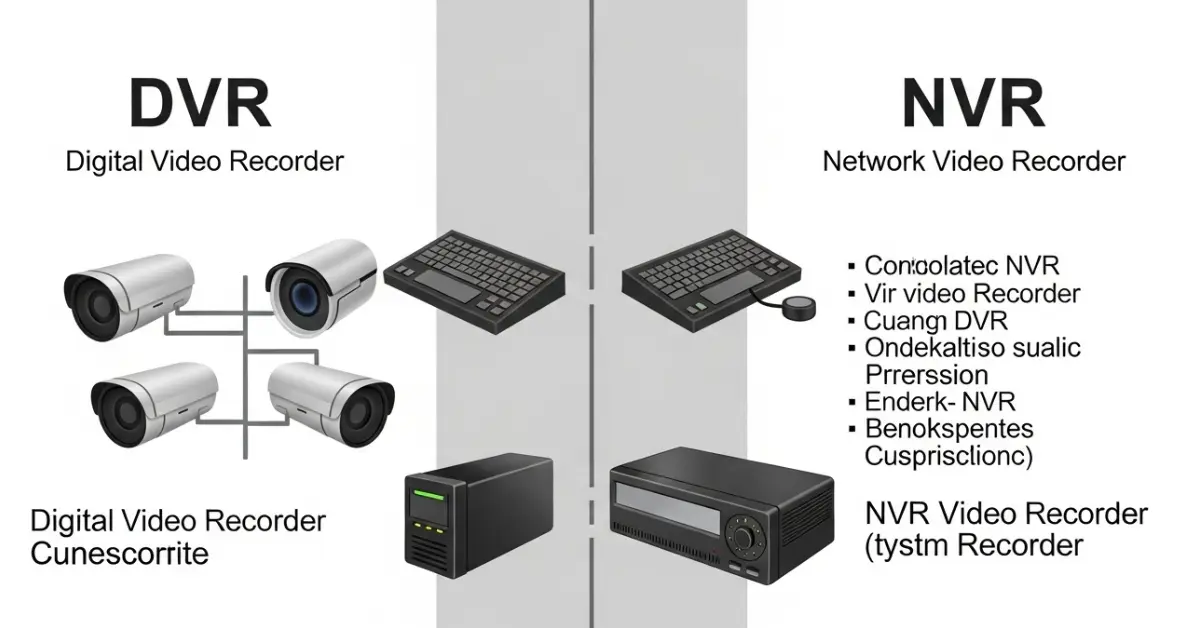
The difference between DVR and NVR is about how security cameras record video. A DVR works with analog cameras. An NVR works with digital IP cameras. When people learn the difference between DVR and NVR, they can choose the right security system for their homes or offices. Understanding the difference between DVR and NVR also helps people save money and get better security.
Key Difference Between the Both
The main difference between DVR and NVR is how they record video. DVR systems record video from analog cameras using coaxial cables. NVR systems record video from digital IP cameras through a network connection.
Why It Is Important to Know the Difference
Knowing the difference between DVR and NVR is useful for beginners and experts. Security cameras protect homes, schools, offices, and shops. If someone chooses the wrong system, the video quality may not be good or the system may be hard to install.
Pronunciation
DVR
US: dee vee ar UK: dee vee ar
NVR
US: en vee ar UK: en vee ar
Now let us explore the full difference between DVR and NVR in simple points.
Difference Between DVR and NVR
1. Type of Camera
DVR
DVR systems work with analog cameras.
Examples: • A small shop using old CCTV cameras. • A home with a basic camera system.
NVR
NVR systems work with digital IP cameras.
Examples: • A smart home with WiFi cameras. • A modern office security system.
2. Video Processing
DVR
The DVR device processes the video.
Examples: • The camera sends raw video to the DVR box. • The DVR converts the signal to digital form.
NVR
The camera processes the video first.
Examples: • The camera compresses video before sending it. • The NVR simply stores the video.
3. Cable Type
DVR
Uses coaxial cables.
Examples: • Thick CCTV cables in older buildings. • Cables running from each camera to the recorder.
NVR
Uses Ethernet cables.
Examples: • Network cables like those used for internet. • One cable can carry power and data.
4. Installation
DVR
Installation can take more time.
Examples: • Each camera needs its own cable. • Many cables must be connected to the DVR.
NVR
Installation is easier.
Examples: • Cameras connect through a network switch. • Some cameras connect with WiFi.
5. Video Quality
DVR
Video quality is usually lower.
Examples: • Basic video for small stores. • Older home camera systems.
NVR
Video quality is higher.
Examples: • HD and 4K cameras. • Clear video in modern buildings.
6. Flexibility
DVR
Harder to add new cameras.
Examples: • Limited camera ports. • System upgrades are difficult.
NVR
Easy to add cameras.
Examples: • New cameras connect to the network. • The system can grow easily.
7. Cost
DVR
Usually cheaper.
Examples: • Budget home systems. • Small shop security.
NVR
Usually more expensive.
Examples: • Large office systems. • Smart home security.
8. Remote Access
DVR
Remote features are basic.
Examples: • Simple mobile viewing. • Limited online access.
NVR
Remote features are better.
Examples: • Cloud storage options. • Phone alerts and live viewing.
9. Smart Features
DVR
Has basic features.
Examples: • Simple motion recording. • Standard video storage.
NVR
Has smart features.
Examples: • Face recognition. • Smart motion alerts.
10. System Growth
DVR
Hard to expand.
Examples: • Adding cameras needs more cables. • System upgrades are limited.
NVR
Easy to expand.
Examples: • Add cameras to the network. • Good for growing businesses.
Nature and Behaviour
DVR
DVR systems are older and simple. They record video from analog cameras. They are affordable and reliable.
NVR
NVR systems are modern and digital. They work with smart IP cameras and give better video quality.
Why People Are Confused
Many people think DVR and NVR are the same because both record video from cameras. The devices look similar and both store footage. People also do not know the difference between analog cameras and IP cameras.
Which Is Better in What Situation?
DVR Systems
DVR systems are better for small homes and shops. They are cheaper and simple to use. If a place already has coaxial cables, DVR is a good choice. For basic security, DVR systems work well.
NVR Systems
NVR systems are better for modern homes and large offices. They give clear video and smart features. They are easy to expand when more cameras are needed. If someone wants high quality security, NVR is the better choice.
Metaphors and Similes
• A DVR system is like an old notebook that records everything. • An NVR system is like a smart computer that understands video. • Choosing DVR or NVR is like choosing a basic phone or a smartphone.
Connotative Meaning
DVR
Neutral meaning. It shows traditional technology.
Example: The shop still uses a DVR system because it is simple.
NVR
Positive meaning. It shows modern technology.
Example: The office installed an NVR system for advanced security.
Idioms Related to Watching and Safety
Keep an eye on something
Example: Cameras help us keep an eye on our homes.
Better safe than sorry
Example: Installing cameras is better safe than sorry.
Watch like a hawk
Example: Security guards watch the screens like a hawk.
Movies About Surveillance
• Enemy of the State (1998, USA) • Eagle Eye (2008, USA) • The Conversation (1974, USA)
FAQs:
1. What does DVR mean? DVR means Digital Video Recorder.
2. What does NVR mean? NVR means Network Video Recorder.
3. Which system has better video quality? NVR systems usually have better video quality.
4. Are DVR systems still used? Yes, many homes and small shops still use DVR systems.
5. Can DVR cameras work with NVR systems? No, DVR cameras usually do not work directly with NVR systems.
How Both Help Our Surroundings
DVR and NVR systems help keep places safe. They protect homes, shops, schools, and offices. Cameras can stop crime and help police find criminals. They also make people feel safer in public places.
Final Words
DVR systems are simple and affordable. They are good for basic security needs. NVR systems are modern and smarter. They give better video and more features.
Conclusion:
The difference between DVR and NVR is mainly about the type of cameras and how video is recorded. DVR systems work with analog cameras and use coaxial cables. NVR systems work with IP cameras and use network cables.
Both systems are useful in different situations. DVR is good for simple and low cost security. NVR is better for modern buildings and high quality video.

I am a professional English article writer with expertise in creating clear, well-researched, and engaging content. I specialize in writing informative articles that maintain accuracy, strong structure, and a polished tone. My work reflects a deep understanding of grammar, vocabulary, and audience needs. I am committed to delivering high-quality content that communicates ideas effectively and adds value to readers.