In a small bicycle shop in Lahore, a boy brought his noisy bike to the mechanic. The mechanic said, “The bearing inside the wheel is worn out.” Then he also said, “The handle has a bad bushing.” The boy looked confused. Both parts were small and round. Why were they called different names?
This is why it is important to understand the difference between bushing and bearing. Both parts help machines move smoothly. Both reduce rubbing between parts. But the difference between bushing and bearing is in how they are made and how they work.
Key Difference Between the Both
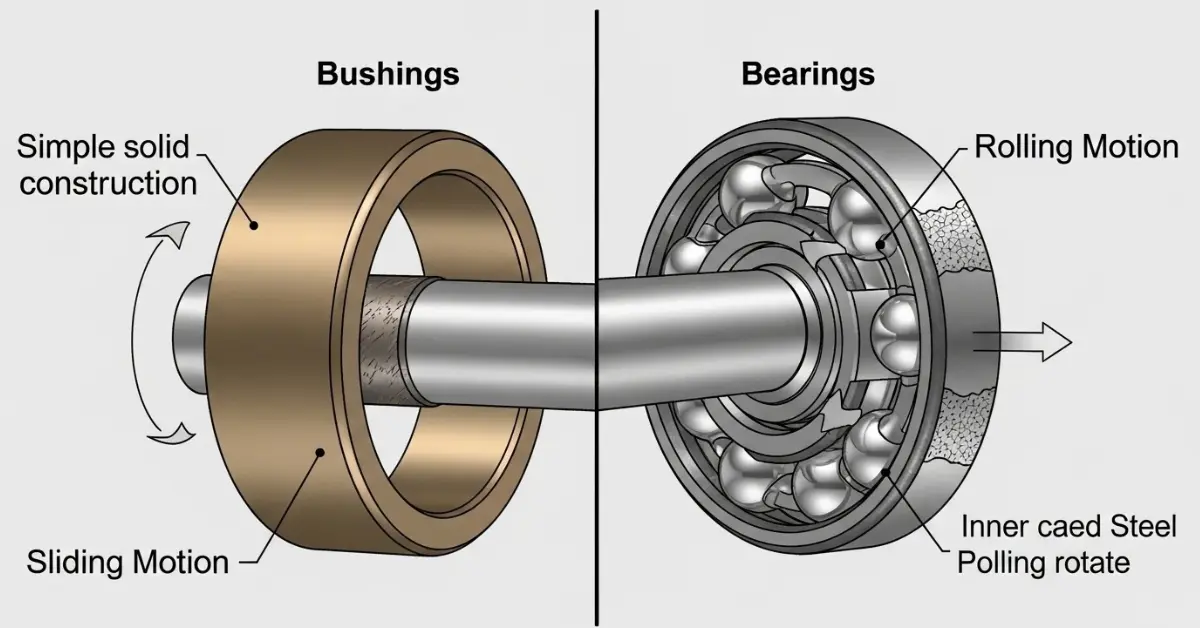
- A bushing is a simple sleeve that helps reduce friction.
- A bearing has small balls or rollers inside to help parts spin smoothly.
Why Is It Important to Know the Difference?
Machines are all around us. Bicycles, cars, ceiling fans, and washing machines use these parts. If a mechanic chooses the wrong part, the machine may break or make noise.
For students, it builds basic science knowledge. For mechanics and engineers, it helps fix machines correctly. Even regular people can understand better when something needs repair.
Pronunciation
Bushing
- US: /ˈbʊʃ-ing/
- UK: /ˈbʊʃ-ing/
Bearing
- US: /ˈber-ing/
- UK: /ˈbeə-ring/
Difference Between Bushing and Bearing
1. What They Are
Bushing A hollow tube placed between two parts. Example 1: A bike handle may have a bushing. Example 2: A car suspension uses bushings.
Bearing a part with small balls or rollers inside. Example 1: Bike wheels use bearings. Example 2: A fan motor has bearings.
2. How They Work
Bushing It allows sliding movement. Example 1: A door hinge may slide on a bushing. Example 2: A rod can move inside a bushing.
Bearing It allows smooth spinning. Example 1: A wheel spins on bearings. Example 2: A skateboard rolls on bearings.
3. Design
Bushing Simple and solid. Example 1: Made of rubber or metal. Example 2: No moving balls inside.
Bearing More complex. Example 1: Contains steel balls. Example 2: Has inner and outer rings.
4. Cost
Bushing is usually cheaper. Example 1: Easy to replace. Example 2: Low cost part in cars.
Bearing is usually more expensive. Example 1: Needs careful installation. Example 2: Costs more than bushings.
5. Speed
Bushing Good for slow movement. Example 1: Used in simple machines. Example 2: Works well with light motion.
Bearing Good for fast movement. Example 1: Used in car wheels. Example 2: Used in electric motors.
6. Noise
Bushing Usually quiet when new. Example 1: Rubber bushings reduce vibration. Example 2: Makes less metal noise.
Bearing may make noise when worn out. Example 1: Worn bearing makes grinding sound. Example 2: Old wheel bearings make a humming sound.
7. Material
Bushing Often rubber, plastic, or bronze. Example 1: Rubber car bushings. Example 2: Bronze sleeve bushings.
Bearing Usually steel or ceramic. Example 1: Steel ball bearings. Example 2: Ceramic bearings in bikes.
8. Maintenance
Bushing Needs less maintenance. Example 1: No lubrication sometimes needed. Example 2: Simple replacement.
Bearing Needs proper care. Example 1: Needs lubrication. Example 2: Must be cleaned sometimes.
9. Where Used
Bushing Used in car suspension and door hinges. Example 1: Car control arms. Example 2: Furniture joints.
Bearing Used in wheels and motors. Example 1: Bicycle wheels. Example 2: Washing machine drums.
10. Strength
Bushing Good for absorbing shock. Example 1: Rubber bushings reduce vibration. Example 2: Protects parts from damage.
Bearing Good for carrying heavy loads at speed. Example 1: Car wheel bearings hold weight. Example 2: Factory machines use heavy-duty bearings.
Nature and Behavior
A bushing is simple and soft in many cases. It reduces friction by sliding.
A bearing is stronger and helps things spin smoothly using rolling parts.
Why People Get Confused
Both are small round parts. Both reduce friction. Both are used inside machines. That is why many people think they are the same. But their working style is different.
Which Is Better in What Situation?
Bushing is better when the movement is slow and simple. It is good for parts that need shock absorption. It is also cheaper and easy to replace.
Bearing is better when the movement is fast and needs smooth spinning. It is perfect for wheels and motors that move quickly and carry weight.
Metaphors and Similes
- A bushing is like a soft cushion between two hard parts.
- A bearing is like tiny helpers rolling to make things spin easily.
Connotative Meaning
Both words are neutral because they are technical terms.
Example:
- “The mechanic replaced the bushing.”
- “The bearing inside the wheel was damaged.”
Idioms Related to Movement
- “Keep the wheels turning.” Example: Bearings help keep the wheels turning.
- “Smooth as silk.” Example: A new bearing makes the wheel smooth as silk.
Frequently Asked Questions
1. Are bushing and bearing the same? No, they work differently.
2. Which one is cheaper? A bushing is usually cheaper.
3. Which one is used in wheels? Bearings are used in wheels.
4. Can a bad bearing make noise? Yes, it can make grinding sounds.
5. Do bushings need oil? Sometimes, but not always.
How Both Are Useful Around Us
Bushings and bearings help machines work smoothly. They reduce friction and protect parts from damage. Without them, cars, bikes, and fans would not work properly. They make our daily life easier and safer.
Final Words
The bushing is simple and soft. The bearing is complex and strong.
Both are small parts, but both are very important.
Conclusion
The difference between bushing and bearing is easy to understand when we look at how they work. A bushing is a simple sleeve that helps parts slide smoothly. A bearing has small balls or rollers that help parts spin easily. Bushings are cheaper and good for slow movement. Bearings are stronger and better for fast spinning parts like wheels and motors. Even though they look similar, they have different jobs. Learning about these parts helps us understand how machines work in our daily lives.

I am a professional English article writer with expertise in creating clear, well-researched, and engaging content. I specialize in writing informative articles that maintain accuracy, strong structure, and a polished tone. My work reflects a deep understanding of grammar, vocabulary, and audience needs. I am committed to delivering high-quality content that communicates ideas effectively and adds value to readers.